Why Everyone is Buying the B5 Oled (Full Review)
I've been using the B5 Oled as my main TV for several months now, and I wanted to put together a full, honest review based on real-world daily use. When I first unboxed it I felt the same buzz you see in forums and social feeds — gorgeous panel, ultra-thin profile, and a spec sheet that looks great on paper. After weeks of movies, games, sports, and everyday streaming, what I found was a TV that delivers stunning picture quality most of the time, with a few practical trade-offs that matter depending on how you use it.
Introduction: My setup and why I chose the B5 Oled
I mounted the B5 Oled on a living-room wall about 2.5 meters (8 feet) from the main couch. The room gets bright afternoon sunlight from one side, and we use the TV for a mix of movie nights, gaming, and background streaming during the day. I picked the B5 because it hit the sweet spot between price and features — Oled contrast, modern HDMI 2.1 inputs, and a clean smart-TV platform. I was also curious whether a midrange Oled would be noticeably better than the LED set it replaced.
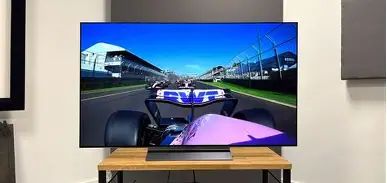
Before sharing specifics, a quick note on expectations: I’m not treating this as lab testing with instruments. These are hands-on observations from daily use — picture, sound, interface, and the small annoyances you only notice after living with a TV for months.
Design and build: Minimal and modern
The B5 Oled is what you expect from an Oled design: paper-thin where the panel is, with a slightly thicker housing at the connection spine. The bezel is narrow, which looks great when watching widescreen movies. I appreciated the matte finish on the frame — it hides fingerprints better than gloss. The stand is sturdy and keeps the set sitting low on the media console; if you wall-mount, the TV sits quite flush and looks elegant.
One small thing I noticed: cable management on the back is functional but not fantastic. The ports are all clustered on the lower edge which made routing my HDMI cables a little tight behind a shallow floating shelf. Not a deal-breaker, but worth a mention if you have a similar furniture setup.
Picture quality: What really sold me
The real reason people are buying Oleds is the infinite black and contrast, and the B5 delivers that in spades. Dark scenes in movies like night exteriors or candlelit interiors suddenly have depth — blacks are inky without the haloing or backlight bloom you sometimes see on LED sets. I was surprised by how much this changed my perception of color and detail in shadowed areas.
Color out of the box leaned slightly warm to my eye, which I fixed by switching to the \"Cinema\" picture mode and dialing down the color temperature a touch. Once calibrated to my preferences, skin tones looked natural and bright HDR highlights — explosions, reflective surfaces, specular highlights — popped in a satisfying way.
Where the B5 struggles a bit is peak brightness. In dim rooms it’s brilliant, but in very bright rooms with direct sunlight the absolute peak HDR highlights don’t compete with the brightest LED or Mini-LED models. I noticed this most on HDR content with intense sun glare on-screen — the image can look a touch muddier in those specific scenes compared to a peak-brightness-focused LED. That said, for the majority of content (most movies and games, evening viewing), the HDR experience was excellent.
Uniformity and panel behavior
Panel uniformity has been very good for me. I do have a tiny bit of vignetting at extreme viewing angles if I look off to the side, but in normal seating positions the screen looks uniform. The infamous Oled “whitewash” effect in very bright static UI elements is minimal on the B5 — I’ve had no significant banding or dirty screen effect in my copy.
Looking for the best TVs & Home Theater deals on Amazon?
See Deals →Burn-in is a valid concern with any Oled. I deliberately used the TV for long gaming sessions with HUDs and left a news ticker on for a few hours during a test. After several months of typical mixed content, I haven’t observed permanent burn-in. I also use the built-in pixel-shift and screen-saver features and avoid running static logos on full brightness for prolonged periods. If you plan heavy static content (e.g., digital signage), keep this in mind.
Motion handling and input: Great for gamers
One of the things that impressed me during extended gaming sessions was how responsive the B5 feels. Input lag in game mode is very low — I could feel the difference coming from my older LED TV. Variable refresh features like VRR and auto low-latency mode worked well with my console and PC. I did notice some slight frame timing inconsistencies when enabling certain motion smoothing options, so I keep most of those off and rely on the TV’s native processing.
For sports and fast action, the panel keeps pace admirably. Motion interpolation (when I briefly tried it) made some content look too artificial, but turned off, the clarity is excellent and judder during camera pans is minimal.
Smart TV platform and usability
The B5 runs a modern smart platform that’s snappy most of the time. Apps launch quickly, and streaming 4K content from the major services has been reliable. I did encounter one or two app freezes over several months; a quick restart fixed those. The remote is compact, with a good tactile feel, though the layout took me a couple of evenings to internalize.
Voice control is available and works reasonably well for basic tasks, though I still prefer the physical remote for volume and input switching. I like that the TV receives periodic firmware updates; a few updates during my review period improved app performance and added small feature tweaks.
Audio: Acceptable, not exceptional
Internal speakers on the B5 are fine for daily TV watching — clear dialogue and decent midrange — but they lack the low-end punch and immersion you get from a dedicated soundbar or AV setup. I connected a compact soundbar via eARC and the difference was immediate: fuller soundstage, deeper bass, and better spatial cues in movies. If you care about cinematic audio, a soundbar is something I recommend pairing with the B5.
Everyday reliability and software quirks
After several months the TV has been stable. I did notice one update that briefly reset a user picture mode back to default, which was annoying because I had custom calibration. The platform logs me out of some apps occasionally, requiring a re-login. These are minor friction points, but cumulatively they remind you that smart TVs still have rough edges compared to a dedicated streaming stick or box in certain workflows.
What I appreciated — and what frustrated me
- Appreciated: True black levels and contrast that make movies feel more cinematic in the living room.
- Appreciated: Excellent gaming experience with low input lag and robust HDMI 2.1 support.
- Appreciated: Thin profile and clean design — it really modernizes the room.
- Frustrated: Peak HDR brightness is good but not class-leading; very bright rooms show this limitation.
- Frustrated: Occasional smart-platform bugs and an update that reset my picture mode.
- Frustrated: Built-in speakers are convenient but underwhelming for movies — I ended up using a soundbar.
Comparison table: B5 Oled vs a higher-end OLED and a high-end LED
| Feature | B5 Oled (what I used) | Higher-end Oled (e.g., premium model) | High-end LED/Mini-LED |
|---|---|---|---|
| Contrast / Black level | Excellent — true blacks | Excellent — similar blacks, sometimes better calibration | Good — depends on local dimming, some blooming |
| Peak brightness (HDR highlights) | Very good for most content, limited in direct sunlight | Higher peak brightness for HDR | Best — excels in bright rooms |
| Gaming features | HDMI 2.1, low input lag, VRR | Same, often with additional mode tuning | Excellent, sometimes comparable input specs |
| Uniformity / Blooming | Very good — minimal blooming | Very good — minimal blooming | Variable — local dimming can cause halos |
| Sound | Serviceable — best with a soundbar | Often better built-in audio or integrated systems | Varies — usually serviceable |
| Price / Value | Great value for Oled experience | Premium price | Can be competitive but not Oled blacks |
Pros & Cons
Pros
- Stunning contrast and true blacks that dramatically improve movie viewing.
- Excellent color reproduction after minor calibration adjustments.
- Low input lag and HDMI 2.1 features make it a great gaming TV.
- Slim, attractive design that fits modern living rooms.
- Smart platform is fast and receives updates.
Cons
- Peak brightness is lower than the brightest LED/Mini-LEDs — less ideal in very sunny rooms.
- Internal speakers lack bass and fullness; a soundbar is recommended for better sound.
- Some occasional smart-TV software hiccups and updates that can reset settings.
- Oled-specific considerations like potential burn-in require mindful usage.
Buying guide: How to decide if the B5 Oled is right for you
Here are the practical considerations I used when deciding whether to keep the B5, and the same checklist you can use for your purchase decision.
1. Room brightness and viewing habits
If you primarily watch in a dim or moderately lit living room, the B5’s contrast and cinematic blacks will be transformative. If the TV will sit opposite large windows with strong direct sunlight for much of the day, consider whether you need the absolute peak brightness of a high-end LED or Mini-LED instead.
Find top-rated TVs & Home Theater products at great prices.
View Offers →2. Mix of content: games, movies, sports
For gaming and movie nights, the B5 shines. If your household streams a lot of daytime news channels or channels with static tickers for long hours, be cautious about long static UI elements and use the TV’s pixel-shift and screen-saver features.
3. Audio expectations
If you want immersive home-theater sound without additional equipment, the built-in audio might disappoint. I quickly paired a soundbar and it greatly improved experience. If you’re okay spending a bit extra on audio, the B5 pairs well with compact sound systems.
4. Smart platform and ecosystem
Check the TV’s app roster for services you use and whether the platform supports the devices you want to connect (streaming sticks, gaming consoles, audio equipment via eARC). Also look at the manufacturer’s update history — frequent updates are a good sign.
5. Size and budget
Oleds tend to be more expensive per inch than LED. Think about how big a screen you need for your seating distance and whether the price premium for Oled contrast is worth it over a similarly sized high-end LED.
6. Longevity and long-term use
Oleds typically last many years with no issues, but if your usage involves long static images you should take measures to reduce burn-in risk: avoid leaving static HUDs on high brightness, enable pixel-shift and automatic dimming settings, and vary content when possible.
Practical tips from my months of use
- Switch to the Cinema or Movie picture mode and tweak the color temperature slightly warmer for the most natural skin tones.
- Use game mode for consoles to minimize input lag, and enable VRR if your console/PC supports it.
- Pair the TV with a modest soundbar — even an inexpensive one will improve dialogue clarity and bass.
- Take advantage of built-in features that mitigate burn-in (pixel-shift, screen savers, and automatic dimming).
- Before finalizing placement, test the TV in your room during daytime to see how reflections and daylight affect perceived brightness.
Conclusion
After several months with the B5 Oled, I can say it’s the set I reach for when I want the most cinematic picture in my living room. The black levels and contrast are transformative for movies and drama, gaming is responsive and enjoyable, and the design is elegant. There are practical compromises — peak brightness in very bright rooms, average onboard audio, and the usual Oled care considerations — but for my mix of evening movie nights and gaming, the trade-offs are worth it.
If you want an Oled experience without paying top-tier premium prices and you’re willing to pair it with a soundbar if you care about audio, the B5 is a compelling, well-rounded choice. In my experience, that combination is why so many people are choosing this model: it balances image quality, modern features, and everyday usability in a way that suits most living rooms.