Color Laserjet Enterprise M553Dn First Look: Unboxing and Impressions
The Color Laserjet Enterprise M553Dn is positioned as a mid‑to‑large workgroup color laser printer aimed at busy offices that need reliable, relatively fast color output without moving to an all‑in‑one multifunction device. This first‑look walkthrough focuses on the unboxing experience, initial setup, key features, print quality, ongoing costs, and typical real‑world use cases to help buyers decide whether the M553Dn is a fit for their environment.
Introduction
When businesses evaluate printers for shared use, priorities usually include speed, reliability, security, and a predictable cost of ownership. The M553Dn is part of HP’s enterprise line and is designed to live on a network rather than attached to a single workstation. This review approaches the printer from the point of view of an IT manager or office buyer who needs objective, hands‑on impressions: how easy is it to get running, how it handles day‑to‑day tasks, and what tradeoffs to expect when choosing a color laser for a busy office.
Unboxing and First Impressions
Out of the box the M553Dn presents as a compact but substantial office machine. Packaging is protective and the components are generally well organized inside: the printer itself, one or more starter toner cartridges, a power cord, and printed setup documentation. HP’s enterprise models tend not to include unnecessary extras; expect the essentials needed to get started.
Initial impressions emphasize build solidity rather than consumer styling. The chassis uses matte plastics with practical access points for paper jams and cartridge replacement. The control surface is utilitarian: a color touchscreen on higher trims is common in the enterprise line, but the M553Dn prioritizes tactile buttons and a clear status display for quick operations.
Design and Build Quality
Physically, the M553Dn is designed to sit in a shared office area or print room. Materials are chosen for durability along with easy maintenance: doors and trays snap open with clear release levers, and toner cartridges are straightforward to replace. While not designed to be a statement piece, the printer's form factor attempts to balance footprint and paper capacity so that it can be placed near a workgroup rather than in a dedicated print closet.
Noise levels are an important part of perceived build quality. In typical office use (mixed color and monochrome jobs), the M553Dn behaves quietly at idle and produces the expected mechanical hum and toner fusing sound while printing. It is generally acceptable for an open office, though very quiet environments may notice output noise during heavy runs.
Setup and Connectivity
Setup is oriented around IT deployment: the device is ready for wired network integration out of the box. The M553Dn is primarily intended to be connected via Ethernet to a shared network, and its administrative menus expose options for DHCP/static addressing, DNS, and authentication methods used by enterprises.
For small teams without a dedicated network, USB setup is usually supported for a single PC. Wireless is typically not the focus on this model — buyers who need Wi‑Fi should confirm the specific SKU or consider models with integrated wireless connectivity.
HP’s web administration interface and support for standard network printing protocols (IPPS/IPP/RAW/LPD) make it straightforward for IT staff to configure access controls, quota tracking, and secure print release. Mobile printing and cloud integrations may be supported depending on the firmware and company policies, but core network deployment is the M553Dn’s strength.
Print Speed and Performance
The M553Dn targets mid‑to‑heavy office workflows and delivers consistent throughput for typical workgroup tasks. In everyday operations—reports, presentations, spreadsheets—the printer maintains steady pages‑per‑minute performance and handles multi‑page jobs without disruption. The device is well suited to environments that require mixed black‑and‑white and color printing rather than high‑resolution photographic output.
Find top-rated Electronics products at great prices.
Shop Amazon →Performance is characterized by rapid first‑page times from a ready state and sustained output during continuous print jobs. In realistic office scenarios, this translates to minimal queue times for intermittent users and predictable completion times for larger print runs. Paper path design and duplexing are engineered to reduce jams, and the M553Dn is usually forgiving when handling typical office stocks such as plain, heavy, or preprinted letterhead paper.
Print Quality (Text, Graphics, and Color)
Laser printers are traditionally strong with crisp text, and the M553Dn continues that trend. Black text is sharp, with solid contrast for body copy and fine fonts—making it ideal for contracts, administrative documents, and internal communications.
Color output is competent for charts, graphs, and marketing collateral intended for in‑house distribution. The M553Dn produces vibrant solid fills and reasonable gradients for business graphics. Buyers who expect photo‑lab quality for images will find the limitations of laser toner noticeable: while color is accurate for most corporate purposes, photographs may lack the tonal subtlety, dynamic range, and gloss typically associated with inkjet photo printers.
Color consistency across long runs is strong when toner cartridges are within their normal operating range. Expect occasional small differences between cartridges as supplies run low; routine maintenance and using genuine consumables helps maintain predictable color across pages.
Paper Handling and Capacity
Workgroups value paper capacity and flexibility. The M553Dn comes with a standard paper tray and an additional drawer for added capacity; optional trays can expand the total capacity further for high‑volume teams. Automatic duplexing (two‑sided printing) is standard and works reliably for reports and manuals, reducing both paper use and the need for manual intervention.
Specialty media handling—such as envelopes, labels, and heavier card stock—is supported within limits. Users who plan to run very heavy or unusually sized stocks should verify the recommended ranges and test a sample run to ensure feed reliability. For envelope batches, slow down print speed and allow for adequate cooling between jobs to avoid creasing or toner transfer issues.
Security and Manageability
Security features are a primary selling point in enterprise printers. The M553Dn typically includes administrative controls to limit access, require authentication for certain functions, encrypt network traffic, and log usage. These features are important for organizations that must protect sensitive documents and track printing costs.
From an IT perspective, centralized device management (via common enterprise management consoles) and firmware update mechanisms reduce maintenance overhead. The printer’s support for secure protocols and optional secure print release helps integrate it into environments with strict compliance requirements.
Consumables and Cost of Ownership
Cost of ownership hinges on toner yields, drum life, and maintenance contracts. The M553Dn uses separate color and black toner cartridges, and high‑yield options are available for heavier use. While per‑page costs for color lasers are higher than monochrome devices, they become reasonable for offices that need occasional or frequent color output for business documents and presentation materials.
Buyers should consider total cost over time: list prices for cartridges, yield per cartridge, whether the organization uses HP’s managed print services, and the potential benefits of toner recycling programs. Service contracts and on‑site support options also affect long‑term costs and should be included in procurement calculations.
Find top-rated Electronics products at great prices.
Browse Now →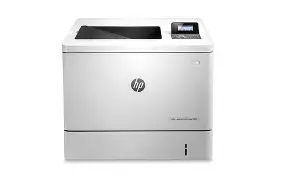
Real‑World Use Cases
- Mid‑sized office workgroup: The M553Dn serves shared teams that need reliable color for internal reports, brochures, and client materials without investing in larger print rooms.
- Marketing and administrative hybrid teams: Teams that produce slide decks, spreadsheets with charts, and handouts will find the color and speed advantageous for quick turnarounds.
- Reception or client service areas: For front‑office print needs—sign‑in sheets, appointment confirmations, promotional handouts—the machine balances speed and print quality.
- Small print room supplement: Organizations that already have a dedicated print center may use the M553Dn as a dependable distributed printer for departments that require frequent small runs.
Pros & Cons
Pros
- Strong, consistent text quality for business documents and contracts.
- Reliable workgroup throughput with practical duplexing and paper handling.
- Solid security and network management features suitable for enterprise environments.
- Durable build designed for frequent use and straightforward maintenance.
- Separate toners allow targeted replacement and can lower waste when one color is used less frequently.
Cons
- Color photo reproduction is not on par with higher‑end inkjet photo printers.
- Wireless connectivity may be limited or require optional modules—check the exact SKU for Wi‑Fi needs.
- Per‑page color costs are higher than monochrome printers and varying depending on cartridge yields and usage patterns.
- Footprint may be larger than compact desktop models; space planning is necessary.
How the M553Dn Compares
| Model | Ideal for | Print Speed (approx.) | Duplex | Network | Wireless | Notable Strengths |
|---|---|---|---|---|---|---|
| HP Color Laserjet Enterprise M553Dn | Mid‑to‑large workgroups needing dependable color | Up to ~40 ppm | Automatic | Ethernet (enterprise protocols) | Typically no (varies by SKU) | Enterprise security and management, robust throughput |
| Brother HL‑L8360CDW | Small to mid offices looking for compact color laser | Up to ~33 ppm | Automatic | Ethernet, USB | Yes (Wi‑Fi) | Compact footprint, good color for business graphics, consumer‑friendly features |
| HP Color LaserJet Enterprise M554dn | Teams needing slightly newer feature set or higher capacity | Up to ~45 ppm (varies by trim) | Automatic | Ethernet | Typically no (varies by SKU) | Faster throughput and expanded management options in certain configurations |
Buying Guide: What to Consider Before Purchasing
1. Monthly Page Volume and Duty Cycle
Estimate average and peak monthly page volumes. Match the printer’s recommended monthly duty cycle to avoid premature wear. An under‑spec’d device will struggle with continuous large print batches, while an over‑spec’d device increases capital outlay unnecessarily.
2. Color Needs vs Cost
Decide how critical high‑quality color is. For crisp charts and marketing materials intended for local distribution, a color laser makes sense. For photographic fidelity or large color proofing runs, inkjet or professional print services remain better choices. Factor in color cost‑per‑page when calculating budgets.
3. Network and Security Requirements
For offices that require secure printing, integration with directory services, or centralized management, confirm the device supports your authentication methods and management consoles. Ask about available security modules and firmware update mechanisms.
4. Consumables and Support
Review toner yields, the availability of high‑yield cartridges, and whether the vendor offers managed print services or maintenance contracts. Consider recycling programs and the environmental footprint of consumables.
5. Space and Placement
Measure the intended footprint, including clearance for opening trays and replacing cartridges. Noise and emissions from toner fusing are modest but can be relevant in open office layouts.
6. Expandability and Future Proofing
Check for optional paper trays, finishers, or firmware features that might be useful as business needs change. Buying a model that can expand later can be more cost‑effective than a full replacement.
7. Vendor Support and Warranty
Confirm warranty length, on‑site service availability, and the responsiveness of the vendor’s support in your region. A reliable service plan often outweighs small differences in initial purchase price for enterprise deployments.
Conclusion
The HP Color Laserjet Enterprise M553Dn is a pragmatic choice for organizations that need a dependable, secure, and reasonably fast color printer for shared use. It combines solid text reproduction, competent color for business materials, and enterprise‑grade manageability—features that matter for mid‑sized offices or departments within larger organizations. Prospective buyers should weigh their color fidelity needs, connectivity requirements, and total cost of ownership against alternatives. For teams that print a mixture of color and monochrome documents in a networked environment, the M553Dn offers a balance of performance and manageability that often justifies its placement at the center of a workgroup’s print strategy.