Biggest Lg Ultrafine 6K Evo 32U990A Monitor Buying Mistakes (And How to Avoid Them)
The LG UltraFine 6K Evo 32U990A monitor positions itself as a premium 32-inch workstation display aimed at creators, professionals, and anyone who demands very high resolution and color fidelity. With advanced panels, wide color gamuts, and high peak brightness for HDR work, these displays promise a near-reference experience. Yet buyers routinely stumble into avoidable mistakes that undermine satisfaction or add unexpected costs. This article walks through the most common errors people make when considering the Lg Ultrafine 6K Evo 32U990A and, importantly, how to avoid them.
Introduction: why the right expectations matter
High-resolution, high-dynamic-range monitors like the Lg Ultrafine 6K Evo 32U990A offer genuine workflow advantages, but only when the rest of the setup — hardware, software, and environment — is aligned. Buyers often focus only on headline specs and lose sight of practical questions: Will the computer drive the resolution smoothly? Is the panel the right type for the intended use (color-critical photo retouching vs. motion-heavy video editing vs. gaming)? Is the desk and lighting suited to a bright, reflective HDR display? Missteps in any of these areas can leave someone with a top-tier display that doesn’t deliver the real-world experience they expected.
Detailed product analysis: what the Lg Ultrafine 6K Evo 32U990A brings to the table
The Lg Ultrafine 6K Evo 32U990A targets users who need a large, high-pixel-density workspace and accurate color reproduction. In practice, its strengths and limitations tend to cluster around a few dimensions:
Resolution and image clarity
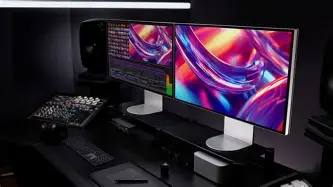
With a 6K-class resolution on a 32-inch panel, the display offers a dense workspace that is excellent for timeline-heavy video editing, high-resolution photo retouching, and multitasking with multiple windows side-by-side. Text and UI elements appear crisp when the operating system and applications are configured to scale appropriately. However, such resolution also increases the burden on the graphics subsystem — this is not a plug-and-play upgrade for every laptop or desktop.
Color and HDR capability
The panel aims for wide color gamut coverage and supports advanced HDR modes that benefit colorists and content creators preparing HDR deliverables. Buyers who prioritize print-proof or broadcast-standard color will appreciate factory calibration and support for professional color spaces. That said, accurate HDR rendition also depends on panel peak brightness, local dimming, and software support — factors that affect real-world HDR performance.
Connectivity and compatibility
Modern workstation monitors in this class often include Thunderbolt/USB-C with power delivery, DisplayPort 1.4/2.0 options, and multiple downstream USB ports for peripherals. For the Lg Ultrafine 6K Evo, buyers should confirm the exact port set and the cable quality required to drive 6K at 60Hz. Compatibility testing with older GPUs, docking stations, and adapters is essential before purchase.
Ergonomics and build
Thirty-two-inch displays are large; ergonomic stands with height, tilt, swivel, and pivot adjustments plus a VESA mount option make the display usable across different desk setups. Build quality and ease of cable routing matter for tidy workspaces. For those planning multi-monitor setups, bezel size and the ability to physically line up adjacent screens are practical considerations.
Performance trade-offs
High-resolution, color-accurate panels typically run at 60Hz and prioritize color fidelity over gaming-centric features like high refresh rates or very low input lag. Buyers who expect to game at ultra-high frame rates may be disappointed. Conversely, photographers and video professionals will prioritize color accuracy, uniformity, and HDR fidelity.
Shop the latest Electronics picks on Amazon.
See Deals →Common buying mistakes and how to avoid them
- Assuming any computer can drive 6K smoothly. Many modern laptops and older desktops lack the GPU horsepower or correct outputs to drive 6K at full refresh and color depth. How to avoid: verify GPU and output specifications (Thunderbolt/USB-C/DisplayPort version) and test the exact connection method before committing.
- Overlooking scaling and user interface adjustments. High pixel density requires OS and app scaling to ensure readable text. How to avoid: check that critical applications handle fractional scaling properly, and plan on tweaking UI scale settings.
- Expecting reference-level HDR without understanding environment constraints. HDR benefits require both a bright panel and controlled ambient lighting; reflections and glare can negate HDR advantages. How to avoid: evaluate the workspace lighting, consider anti-reflective options, and confirm the monitor’s peak brightness and local dimming implementation.
- Ignoring cable and docking compatibility. Cheap adapters or wrong cables can limit resolution, color depth, or refresh rate. How to avoid: use certified high-bandwidth cables and confirm dock support for 6K output.
- Choosing a panel type without considering use-case trade-offs. OLED, Mini-LED, and IPS variants have distinct pros and cons (burn-in risk, contrast, uniformity). How to avoid: match panel type to primary tasks — photographers and editors often prefer IPS-style color stability, while some creators prefer OLED contrast for certain content.
- Forgetting ergonomics and desk fit. A 32-inch screen has physical and visual reach considerations. How to avoid: measure desk depth/width, verify stand adjustments, and consider a monitor arm for flexible placement.
- Not checking warranty, service, and color-calibration options. Professional use benefits from warranty and calibration tools. How to avoid: choose models with accessible calibration controls or bundled calibration reports and confirm warranty terms.
Pros & Cons
- Pros:
- High pixel density suitable for detailed photo and video work
- Wide color gamut and factory calibration potential for color-critical tasks
- Large 32-inch workspace improves productivity and timeline editing
- Modern connectivity (likely Thunderbolt/USB-C and DisplayPort) facilitates single-cable workflows
- Cons:
- Requires a compatible GPU and cables to achieve 6K at full spec
- Typically limited to 60Hz — not ideal for high-refresh gaming
- HDR performance varies with peak brightness and local dimming implementation
- Higher cost and sometimes marginal improvements for users who don’t need ultra-high resolution
Comparison: where the Lg Ultrafine 6K Evo 32U990A sits relative to alternatives
The table below summarizes the most relevant differences a buyer should weigh when choosing between the Lg Ultrafine 6K Evo 32U990A and other popular 32-inch workstation displays commonly considered by professionals.
| Feature | Lg Ultrafine 6K Evo 32U990A | Apple Pro Display XDR | Dell UltraSharp 32 (4K) |
|---|---|---|---|
| Target user | Color-focused creators, editors, professionals seeking high-resolution workspace | High-end color and HDR professionals in Apple ecosystems | General professional users needing large 4K workspace |
| Resolution | 6K-class (very high pixel density) | 6K (6016 × 3384) | 4K (3840 × 2160) |
| Color & HDR | Wide gamut + HDR support; depends on panel tech | Reference XDR-level HDR with wide gamut | Strong color accuracy, HDR limited vs high-end 6K panels |
| Refresh rate | 60Hz (typical) | 60Hz | 60Hz |
| Connectivity | Thunderbolt/USB-C, DisplayPort options; check exact ports | Thunderbolt/DisplayPort via adapters; macOS-optimized | DisplayPort, HDMI, USB-C common |
| Best for | High-res photo/video editing, content creation | Color grading, HDR mastering in studio environments | Office productivity, graphic design, general editing |
| Price category | Premium | High premium | Mid-to-high |
Buying guide: checklist for choosing and integrating the Lg Ultrafine 6K Evo 32U990A
To avoid the most frequent purchase regrets, use this checklist before buying and during setup.
1. Verify system and GPU compatibility
Confirm that the target computer's GPU supports the monitor’s native resolution and color depth at the desired refresh rate. Desktop GPUs with DisplayPort 1.4 or newer and modern Thunderbolt ports are typical enablers. If using a laptop dock, check that the dock supports 6K passthrough rather than only mirroring or compressing the signal.
2. Choose the right cable and port
Use certified high-bandwidth cables. For Thunderbolt or USB-C connections, ensure the port supports DisplayPort Alternate Mode and sufficient power delivery if a single cable setup is intended. Avoid relying on low-cost adapters without testing.
3. Consider the workspace and ergonomics
Measure desk depth and viewing distance. For a 32-inch high-density display, a viewing distance of roughly 20 to 30 inches is common to benefit from detail without excessive head movement. Check stand adjustability or buy a VESA-compatible arm if flexible positioning is required.
4. Evaluate color workflow and calibration
If color accuracy is essential, confirm whether the monitor ships with a calibration report, supports internal LUTs, or integrates with common hardware calibrators. Keep in mind that ambient lighting and your room setup affect perceived color; a dedicated calibration routine yields the best results.
5. Decide on panel technology trade-offs
Research whether the monitor uses IPS, Mini-LED, OLED, or another panel type. Each has trade-offs: contrast and true blacks vs. burn-in risk and uniformity. Match the panel to primary tasks and risk tolerance.
Shop the latest Electronics picks on Amazon.
Browse Now →6. Review HDR needs and content targets
HDR is not a single feature — it is a system involving peak brightness, color volume, and content pipeline support. If producing HDR content, ensure the software and delivery platform support the monitor’s HDR profile and that the monitor achieves the brightness and local-dimming control needed for the intended workflow.
7. Read real-world reviews and test if possible
Factory specs tell part of the story. Seek hands-on reviews focusing on uniformity, backlight bleeding, and color performance in practical workflows. If possible, evaluate the display in person to see how it performs in the intended environment.
8. Plan for future-proofing
Consider how future devices will connect. Investing in Thunderbolt/USB-C connectivity and high-bandwidth ports reduces the chance that a future laptop or GPU cannot fully utilize the display.
Real-world use cases: matching expectations to tasks
Understanding how different professionals use a 6K 32-inch display helps tailor the purchase:
- Photographers: Benefit from the high pixel density for fine retouching and color-critical work; require reliable calibration and softproofing tools.
- Video editors and colorists: Use the extended workspace for timelines and preview panes; HDR-capable panels help when grading HDR deliverables but demand bright, uniformly lit panels and compatible software.
- Graphic designers and UI designers: Gain from precise typography rendering and extra screen real estate; must ensure design tools scale correctly.
- Software developers: Can use the extra pixels for multiple code windows and documentation panes, but most will not need HDR-level color fidelity.
- Casual gamers or multimedia consumers: Will enjoy detail but may find the 60Hz ceiling limiting for competitive play; gamers should evaluate trade-offs carefully.
Final checklist before purchase
- Confirm GPU and port support for 6K at 60Hz with full color depth.
- Plan for certified high-bandwidth cables and docks where needed.
- Measure desk and viewing distance for comfortable placement.
- Verify factory calibration, color-space support, and calibration workflow compatibility.
- Test HDR with real-world content or read detailed HDR performance reviews.
- Check warranty, return policy, and local service options for professional reliance.
Conclusion
The Lg Ultrafine 6K Evo 32U990A represents a compelling option for professionals who need a large, high-resolution workspace and strong color capabilities. However, several common buying mistakes — assuming universal compatibility, neglecting scaling and ergonomics, and underestimating HDR or connectivity requirements — can turn a promising purchase into a source of frustration. By verifying system compatibility, choosing the right cables, understanding panel trade-offs, and matching the display to the intended workflow, buyers can avoid those pitfalls and realize the full benefit of a 6K workstation monitor. Thoughtful preparation and realistic expectations are the best guarantees that the investment will pay off in day-to-day productivity and creative work.